Sunday, November 30, 2014

On Whom the Axe Falls

Carl and Pete prepared themselves for Thanksgiving. They knew what to expect, how it would happen, even who would do it. Clifford had explained everything to them and answered most of their questions as thoroughly as he could. Of all things, Clifford was honest, as honest as a butcher could be.


It was late in the day, the last day, and they were the only two left. They huddled in the back of the pen and gave thanks—for a good life, for good friends, and for the opportunity to provide celebration at the table of some loving family.
Clifford reached in and took Pete. Pete gave the obligatory squawk. He flapped his wings hard in a useless, though expected expression of struggle. But Pete wasn't really struggling. It was all for show. He had settled it days before and with strong resolve he was going willingly.
Carl was now alone. Something hot suddenly filled his throat making it hard to swallow. He was next. He wanted to cry but fought hard against the urge. The trembling within his heart spread quickly until he shook uncontrollably. He kept telling himself this was okay and would be over soon. But Clifford never returned. The minutes that were clicking off much too quickly suddenly slowed to a stop. Darkness came.
What does this mean? Why was he still here? Clifford came back in. He looked at Carl and shrugged, the quota had been met. Carl knew this had not been his day. He was alone. Everyone else who had been there the night before was gone. Only he was left. Why him? He’d never know. What could he do? Obviously nothing. He didn't know what to think. Should he be happy or sad? Regretful or glad?
He chose thankful. It covered everything. Thankful didn't require understanding or explanation. It just required a heart willing to be grateful for all things.

Wednesday, November 19, 2014

Caught in a Downward Spiral?

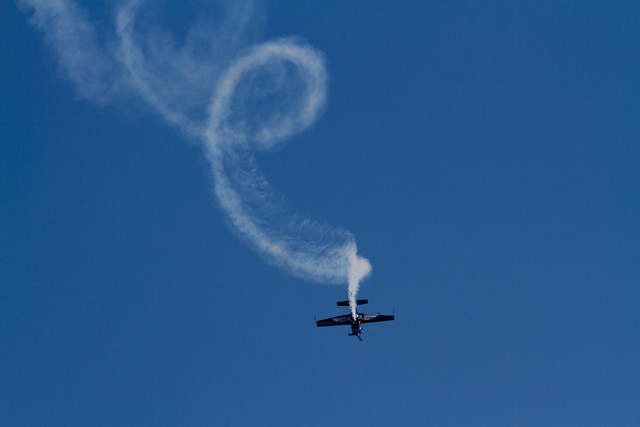
A downward spiral is a set of circumstances that create a nearly irresistible force to take us lower and deeper into our distress. Like an airplane that has lost its ability to maintain flight and begins to tumble to the earth with little chance of recovery, something has interfered with the expected and normal operational capabilities.


Downward spirals are typically the product of a bad decision. In the air, the pilot has demanded something from the airplane that it is not capable of doing. It stalls or the engine quits and the free-fall begins. In our lives, the spiral begins when we start making choices that contradict the expectations of faith. We demand something from life that life is incapable of delivering.

Often in the distress of being entrapped by this downward tug, we make choices that create results that only increase the speed at which we tumble. The faster we fall, the worse decisions we make. 

We, then, create a life that isn't capable of handling our circumstances.
Trying to maneuver through health crises without hope.
Watching the news without a Biblical world view.
Seeing our grandchildren grow up without us having confidence in God’s
                  promises.
Allowing temptations access to the inner sanctuary of our hearts without using
                  God’s way of escape.
Worrying about things we have no control over instead of praying.
Wanting things from God without knowing who He is.
Trudging through life without acknowledging God’s lordship over us.
Living by the impulses of our fleshly desires and expecting God’s blessings.
Believing our actions affect no one but us.
Grieving our loss without Heaven’s perspective.

God gave us a code to live by that makes our lives work as designed. Trying to live our lives by a different code not only will create the irresistible force to tumble us downward, but it will drive us further and deeper into despair and away from God’s intentions. The only hope is to look to Him for help.


If you are caught in the downward spiral today, I submit to you: Phil 4:6 Be anxious for nothing, but in everything by prayer and supplication with thanksgiving let your requests be made known to God. And the peace of God, which surpasses all comprehension, will guard your hearts and your minds in Christ Jesus.

Friday, August 1, 2014

Waiting on God

The challenge of waiting upon the Lord is dealing with the stuff that goes on in the meantime. Without specifics, we generally set a time schedule for God to respond. Though strong in the beginning, the strength of our faith wavers as the hours of that schedule click off. After a while, we begin to doubt His faithfulness. Like the father who brought his demon-possessed son to Jesus and after the disciples couldn’t do anything he challenged Jesus with the words if you can do anything…Nothing’s happening so I question if anything can happen.


According to our expectations, if God worked on our time table rather than His, there would be little lapse between us asking God for intervention and His help. Like calling 911. We have an emergency, we call and help is on the way. In minutes somebody shows up.
But when we turn a matter over to God, he fits the answer into a larger picture that involve things other than just what we thought was the problem. His response is higher than our need.  His perspective is far more encompassing than our limited view.

First of all, we see one issue—say a diagnosis. God sees our limited faith. We want Him to fix the problem that’s been found. He may want to build our faith. He’s not being cruel, just more aware than we are of what’s really important.
We don’t do good at priority lists. We number things by what seems to be yelling the loudest. God sets things in order based upon what’s best.

It is never easy to wait upon the Lord when we’ve made God a list and then demanded His attention to our need. It is faith when we pray believing God is aware, hears our cry and will respond…in time and according to what’s best.
Faith is trusting Him as we wait, knowing He is good and will do what is best when it is the best time to do it.

Wait for the LORD; be strong and let your heart take courage; yes, wait for the LORD. (Psalm 27:14)

Wednesday, July 30, 2014

Hanging on in Between

Vance Havner called it “The Great Not Yet.” It’s that collection of time sandwiched between our need and God’s answer. It’s the realm of the unknown. We know we have a situation, have asked God for help but don’t know what He intends to do. We have neither a yes or no, only a not yet.


I remember how worry used to work in my Mom. Between the rise of her concern and the resolution, everything imaginable would run through her mind. And for some reason most of that was worst case scenario stuff. If there was a hint of doom, even a small percentage of possibility, that doom took on a life of its own. Worriers struggle with that.

Having limited or no answers drives us to imagine what if’s. What if he’s lying in a hospital without clean underwear, what if he’s crumpled up in a ditch after a horrendous car crash, what if he’s developing some dreaded illness from being scratched by his cat…these are the kinds of  things my Mom worried about. However, to her credibility I did do all of the above. But going there without evidence is merely giving into the suspicions of the smallness of God.

If God is in the beginning and the end, He surely is in the middle. If He’s in the right now, He will be in the not yet. The God who is faithful in big things is also faithful in small things. The grace that covers us for salvation also covers us for life.

Paul had to remind the Philippians not to worry but instead to pray. Prayer is our expression of faith that God is there, listening and intent on answering. Prayer does not put God on a time-table. It does not obligate Him. It tunes us into His faithfulness. It reminds us of His presence. I pray and trust. That’s the extent of my abilities to bring about change. If I think my worrying can bring change then I’ve lessened the significance of God in my life.

My Mom struggled with that. I’m trying not to.

Monday, July 28, 2014

But God: the Words that Change Everything

One of the harder responsibilities of a faith-based relationship with Christ is to have a solid understanding of and firm conviction in the two words: But God.


These are the words that help us define faith not in terms of what it is, but how we express it in our lives. Faith exposes whom we trust and what we anticipate by that trust. It speaks of an expectation founded upon a confidence that, beyond how things appear, there is a God without limitation who can bring about any outcome He so orders. Based upon His faithfulness, He then calls us into the privilege of living in the realm of anything being possible until we reach the point when those possibilities would conflict with His planned outcome.

Which means: the opera isn’t over until the fat lady sings is probably, nearly Biblical. If we take the idea of what Yogi Berra meant as being true, then we know until she’s on the stage there is room for possibilities, change, things can still happen to affect the outcome. Until she shows up we know there is still hope.

Paul says, we hope for what we have not seen, not for what we have seen. We live in the interlude of what is going on and how it will be resolved. From the beginning of the opera to the final song much can happen, much can change. It is our period of hope.

The mantra during the period of hope is But God. All the details may be on the table, the cold and hard facts, but God…  All the signs and implications point to only one conclusion, but God… All the plans are laid out and bare with nothing looking promising, but God…

When we stand on But God, we are placing our trust in infinite possibility. Until God is finished, nothing’s over. Until God is done, the plan is still cooking. Until God says, “That’s it, come home,” we stay and fulfill a life of faithfully following the God who loves us and has given Himself for us.


Join me on the pedestal? There’s room for all who will stand upon the promises of God’s faithfulness and will declare, “In light of all that’s going on, the greater truth by far is BUT GOD!”

Tuesday, July 8, 2014

Collateral Damage

Before the age of “smart bombs” there was always a calculated risk to sending a missile into a populated area. If you were lucky or good, you might actually hit the target. But because the ordinance you sent carried an explosive more powerful than what was necessary to take out the target, the circle of destruction would typically be much larger what was aimed at. Hence, the term collateral damage entered the picture.


Collateral damage is the residual effect of an explosive spilling over from its target to the surrounding area. Within that area could be structures or people that will be hit but not targeted. Everything that gets caught up in the moment that isn’t the original target is collateral damage. Smart bombs have minimized that risk but it is still a very real danger.

Collateral damage can also happen in life. Someone may hit the car behind you and push that car into the back of yours. You weren’t the original target but you were caught up in the wreck as collateral damage. A neighbor’s house catches fire and before the firemen can put it out, embers have spread to your house and now it’s burning. Again, collateral damage.

Your friend experienced a tragic loss. Empathy for him overwhelmed you and you have been caught up in the sadness and anger at the events surrounding him. What happened to him is now affecting you. You are collateral damage.

It’s hard enough to deal with our own issues but when we carry the burden for others, sometimes what they go through affects us powerfully. Paul said we are to bear one another’s burdens, thus fulfilling the law of Christ. (Gal 6:2) We enter into the arena where others hurt and help them carry the load. It is a demonstration of love.

Paul went on to say in Romans 15:1 we who are strong are to bear the weaknesses of those without strength… Which means, though we may be touched and affected by their hurt, we must remain strong to provide what they are unable to provide for themselves. They need our strength in their weakness, they need our hope in their despair, they need our faith in their doubts, they need our comfort in their loss, they need our confidence in their future.


Collateral damage should be expected. You can’t walk through life with others and not get some of what they are carrying sloshed on you. But when you do, don’t fuel their sorrow. Feed their faith. Pray for them and with them. It is God who is at work in them, both to will and to work out His good pleasure. (Phil 2:13) This bomb didn’t drop on them without God’s knowledge. And because He knew he also has intentions. Let Him work out His best for them and help as necessary.

Monday, June 9, 2014

Being a Duck

When the boys were growing up and were being affected by what others were saying or doing, I’d repeat our mantra: be a duck.

Ducks, ducks and more ducks

A duck is designed to float. His feathers repel the water. If he absorbed the water he’d sink. So whenever water gets on him it just beads up and trickles off. He can paddle around all day doing his duck thing and enjoying the pond. Then, when he steps out on dry land, he is barely moist.

Without the ability to repel the water, even waddling down to the bank would be quite dangerous. If he slipped in, he might sit on top for a few seconds, but soon the water would start soaking in and eventually it would take him under.

A sponge, on the other hand, is designed to absorb. You don’t want a sponge that repels water. The goal of being a sponge is taking in all you can until you are saturated. Good sponges soak in what splashes around them.

We can’t stop the messages we hear every day that make us feel inferior, sad or rejected. They may come from a friend being unkind, a magazine telling us a lie about our appearance, a commercial hinting at things a real man should do or memories of things our parents told us growing up. There is no end to the messages, but there is a choice in how we deal with them.

Each statement we hear can either stick or trickle off.  If we’re being a sponge, what we hear will absorb.  We’ll carry it with us and even take in some more. Soon, we’ll become saturated with these unwanted messages and begin to see ourselves defined by the excess.

If we’re a duck, they’ll puddle up and trickle off. We heard them but refused to allow them to stick. No excess. No absorbing messages. We’re free to paddle on, defined by the joy of being a duck.


Today, I choose to be a duck.